Month: March 2024

Prepping Supplies to Buy at the Dollar Store

Dollar stores can be great places to find affordable supplies for doomsday prepping. Here are some items commonly available at dollar stores that can be valuable for prepping:

Non-Perishable Food:

While it might seem kind of gross to buy food at the dollar store, they often have the best unit price on things like rice and dried beans. 

Be sure to check expiration dates and compare prices at your other local grocery stores…but often, my dollar store is the best unit price on these food items:

Canned goods (such as vegetables, beans, and meats)

Pasta, rice, and other grains

Packaged snacks (granola bars, nuts, dried fruits)

Water Storage and Purification:

Bottled water

Mason Jars (if you have to store them anyway, store them filled with filtered water!)

Emergency Supplies:

Flashlights and batteries

Candles and matches/lighters

Emergency blankets or space blankets

Glow sticks

First Aid and Medical Supplies:

Basic first aid kits

Bandages, gauze pads, and medical tape

Antiseptic wipes or alcohol pads

Over-the-counter medications (pain relievers, antihistamines)

Hygiene and Sanitation:

Hand sanitizer

Wet wipes

Toilet paper

Disposable gloves

Tools and Supplies:

Multi-purpose tools (such as screwdrivers or pocket knives)

Duct tape

Rope or twine

Ziploc bags (for organizing and waterproofing items)

Cooking and Eating Utensils:

Disposable plates, bowls, and utensils

Aluminum foil

Disposable lighters or matches

Miscellaneous Supplies:

Notepads and pens

Whistles

Tarps or plastic sheeting

Gardening supplies (seeds, small pots, gardening tools)

While dollar stores carry lots of junk that you wouldn’t want to rely on in a SHTF scenario, they also carry lots of name brand, well-built items if you know what you’re looking for. Don’t spend more money to buy the same thing elsewhere. The dollar store is a hidden gem for prepping supplies if you know where to look!

Prepper Items to Buy at Yard Sales

Yard sales can be treasure troves for doomsday preppers. When I was a kid, flea markets had tons of things that I’d love to have today. While garage sales and yard sales may not be as amazing as they once were, I have definitely seen tons of useful prepping supplies for dirt cheap – even in 2024. Here are some items commonly found at yard sales that can be valuable for doomsday prepping:

  1. Tools:
    • Hand tools (e.g., hammers, screwdrivers, wrenches)
    • Multi-tools or Swiss Army knives
    • Shovels, axes, and other outdoor tools
  2. Camping Gear:
    • Tents, sleeping bags, and sleeping pads
    • Camp stoves and portable grills
    • Lanterns, flashlights, and headlamps
    • Backpacks and hydration packs
  3. Survival Gear:
    • Water purification tablets or filters
    • Fire-starting tools (e.g., lighters, waterproof matches, flint and steel)
    • Portable solar chargers for electronic devices
    • Emergency blankets and tarps
  4. Food Preservation Supplies:
    • Canning jars and lids
    • Food dehydrators
    • Vacuum sealers and bags
  5. Outdoor Clothing and Footwear:
    • Sturdy boots and hiking shoes
    • Weatherproof jackets and pants
    • Hats, gloves, and socks suitable for outdoor activities
  6. Water Storage Containers:
    • Large water containers or barrels
    • Water jugs and canteens
  7. Medical Supplies:
    • First aid kits and supplies
    • Over-the-counter medications (check expiration dates)
    • Bandages, gauze, and medical tape
  8. Miscellaneous Supplies:
    • Rope, paracord, and bungee cords
    • Maps and compasses
    • Hand-crank or solar-powered radios

When shopping at yard sales for doomsday prepper supplies, it’s always a good idea to inspect items carefully to ensure they are in good condition and functioning properly. Also, always be thinking ahead. While I thought I wouldn’t need a garden hoe for a long time, I am now in need of one and can’t for the life of me find one at our local flea market.

OTC Medicines to Stockpile

Stockpiling over-the-counter (OTC) medicines for emergencies can be a prudent measure to ensure you have basic medical supplies on hand when needed. Here’s a list of commonly recommended OTC medicines to consider:

  1. Pain and Fever Relief:
    • Acetaminophen (Tylenol)
    • Ibuprofen (Advil, Motrin)
  2. Allergy Relief:
    • Antihistamines (e.g., loratadine, cetirizine)
    • Decongestants (e.g., pseudoephedrine, phenylephrine)
  3. Cough and Cold:
    • Cough syrup or lozenges
    • Decongestants
    • Expectorants (e.g., guaifenesin)
    • Antihistamines for allergy-related symptoms
  4. Digestive Health:
    • Antacids (e.g., Tums, Rolaids)
    • Anti-diarrheal medication (e.g., loperamide)
    • Fiber supplements or laxatives for constipation
  5. Topical Ointments and Creams:
    • Hydrocortisone cream (for itching and skin irritation)
    • Antibiotic ointment (e.g., Neosporin) for minor cuts and burns
    • Calamine lotion for rashes and insect bites
  6. First Aid Supplies:
    • Bandages, gauze pads, adhesive tape
    • Alcohol wipes or hydrogen peroxide for wound cleaning
    • Tweezers for removing splinters
    • Instant cold packs for minor injuries
  7. Eye and Ear Care:
    • Eye drops (artificial tears)
    • Ear drops for earaches or wax buildup
  8. Oral Health:
    • Toothpaste and toothbrushes
    • Dental floss
    • Oral pain relief gel (e.g., benzocaine)
  9. Miscellaneous:
    • Antifungal creams (for athlete’s foot or yeast infections)
    • Motion sickness medication (e.g., dimenhydrinate)
    • Electrolyte solutions or rehydration packets (for dehydration)

Remember to check expiration dates regularly and replace any expired medications. Additionally, consult with a healthcare professional or pharmacist for personalized recommendations based on your medical history and needs.

Vegetable Garden Layouts for Small Backyards

Designing a vegetable garden layout for a small backyard requires careful planning to maximize space and productivity. With a little strategy, you can even make a vegetable garden in the margins of your yard so the little space you do have is still usable for playing and entertaining. Here are some of the best vegetable garden layouts for small spaces:

Square Foot Gardening:

Originally developed by Mel Bartholomew, this is my absolute favorite method on this list.

When I read his book, I just kept thinking “why didn’t I think of this?”

It just makes sense and is so much more efficient than traditional gardening.

To start, divide your garden into square-foot sections using wooden planks or string.

Each square foot can host a different vegetable or herb.

This method maximizes space utilization and makes it easier to manage.

Vertical Gardening:

In our backyard, we combine vertical gardening with square foot gardening.

When you’re short on space, there’s nowhere to go but up.

Utilize vertical space by growing climbing vegetables such as beans, peas, cucumbers, and tomatoes on trellises or vertical structures.

Hanging baskets can also be used for herbs and small vegetables.

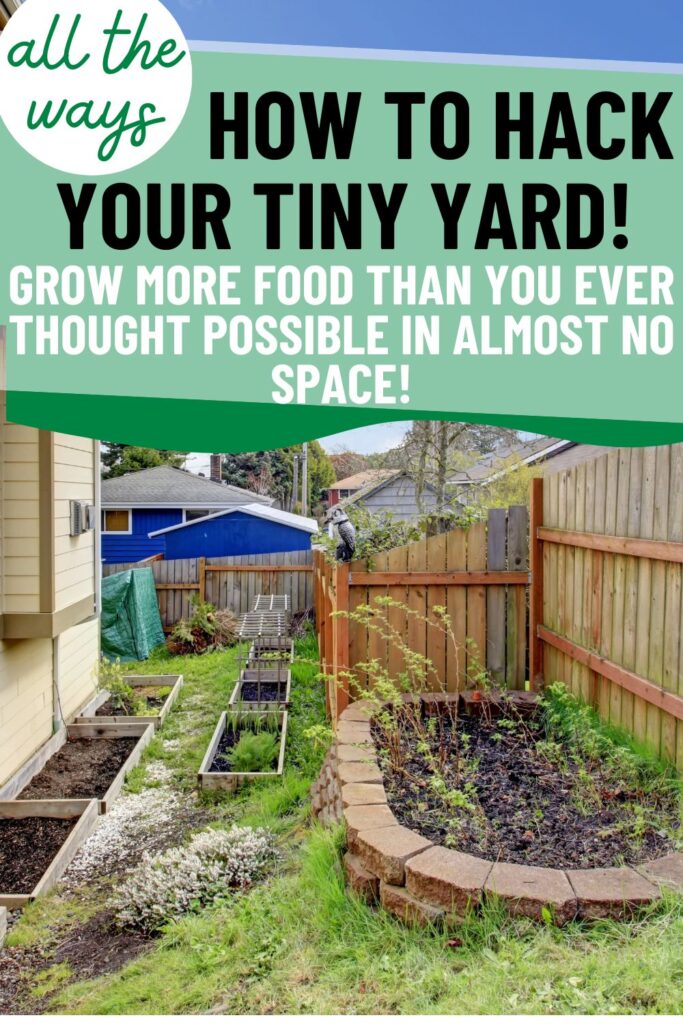
raised beds in small backyard. Text overlay reads "all the ways:  How to hack your tiny yard! Grow more food than you ever thought possible in almost no space!"

Container Gardening:

We live in zone 9a, so the only way to grow some things is in containers.

This year, we’re trying to grow dwarf mango plants in containers and will bring them in and out as necessary.

Grow vegetables in containers such as pots, buckets, or raised beds.

This method is versatile and allows you to place plants strategically to optimize sunlight exposure.

Keyhole Garden:

This is one method I haven’t personally tried, but others swear by it so I thought it deserves a spot on this list.

This circular raised bed design features a center composting basket, surrounded by planting beds.

It maximizes growing space while minimizing the need for pathways, making it ideal for small yards…especially if you plan to create your own compost.

Edible Landscape:

One of the best pieces of gardening advice I’ve ever heard is “you can’t eat the grass.”

Especially in recent years with costs skyrocketing – it just makes sense to try to grow as much of our own food as possible.

In our home, we’d rather have dwarf fruit trees than trees that are simply aesthetically pleasing.

Incorporate vegetables into your existing landscaping, mixing them with ornamental plants.

This approach combines aesthetics with functionality, turning your entire yard into a productive space.

When planning your vegetable garden layout, consider factors such as sunlight exposure, soil quality, water access, and the specific needs of the plants you want to grow. I will encourage you though, start as cheap and as SOON as possible. You can’t grow what you don’t plant. Experiment with different layouts to find the one that works best for your small backyard.

© 2026

Theme by Anders NorenUp ↑