Category: Gardening

Cheapest Way to Make a Vegetable Garden

The cheapest way to make raised garden beds typically involves using materials that are readily available or repurposed. Always check what kind of wood you’re using. While it’s controversial, I personally don’t believe in using treated wood for garden beds.

Fallen Wood or Cut Down Trees:

We are using trees from around our property to construct our beds while using pine straw as mulch.

This means the only thing we’ve paid for is a truckload of compost and seeds.

Wooden Pallets:

Pallets can often be obtained for free or at a very low cost from local businesses. They can be deconstructed and the wood can be used to build simple raised beds.

Cinder Blocks:

Cinder blocks or bricks are relatively inexpensive and can be stacked to create raised beds. They require no assembly and can be configured in various shapes and sizes.

Untreated Lumber:

Using untreated lumber, such as pine or cedar, can be cost-effective for building raised beds. Look for sales or discounted lumber at hardware stores.

Reclaimed or Salvaged Wood:

Look for discarded or reclaimed wood from construction sites, old furniture, or shipping pallets. With a bit of cleaning and treatment, this wood can be repurposed for raised beds.

Corrugated Metal Sheets:

Corrugated metal sheets can be used to construct durable and long-lasting raised beds.

Look for salvaged metal or inquire about factory seconds for a cheaper option.

Repurposed Materials:

Get creative with repurposing materials such as old tires, barrels, or even large plastic containers. These can be filled with soil to create raised planting beds.

Lasagna Gardening or Sheet Mulching (NO Dig):

Instead of building traditional raised beds, you can create raised planting areas directly on the ground using layers of organic materials like cardboard, newspaper, leaves, and compost.

This method requires minimal investment in materials and is what we’re using on our homestead.

Community Resources:

Check with local community centers, gardening clubs, or recycling centers for resources or materials that are being discarded or offered for free.

When choosing materials, ensure they are safe for growing food, especially if you plan to grow vegetables or herbs. Avoid treated lumber or any materials that may leach harmful chemicals into the soil. If I can do this, you can too!
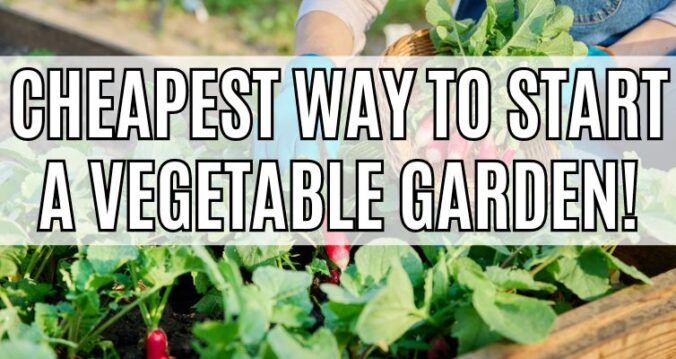
woman tending to vegetables in a raised bed - text overlay reads "cheapest raised beds - using things you probably already have!"

Vegetable Garden Layouts for Small Backyards

Designing a vegetable garden layout for a small backyard requires careful planning to maximize space and productivity. With a little strategy, you can even make a vegetable garden in the margins of your yard so the little space you do have is still usable for playing and entertaining. Here are some of the best vegetable garden layouts for small spaces:

Square Foot Gardening:

Originally developed by Mel Bartholomew, this is my absolute favorite method on this list.

When I read his book, I just kept thinking “why didn’t I think of this?”

It just makes sense and is so much more efficient than traditional gardening.

To start, divide your garden into square-foot sections using wooden planks or string.

Each square foot can host a different vegetable or herb.

This method maximizes space utilization and makes it easier to manage.

Vertical Gardening:

In our backyard, we combine vertical gardening with square foot gardening.

When you’re short on space, there’s nowhere to go but up.

Utilize vertical space by growing climbing vegetables such as beans, peas, cucumbers, and tomatoes on trellises or vertical structures.

Hanging baskets can also be used for herbs and small vegetables.

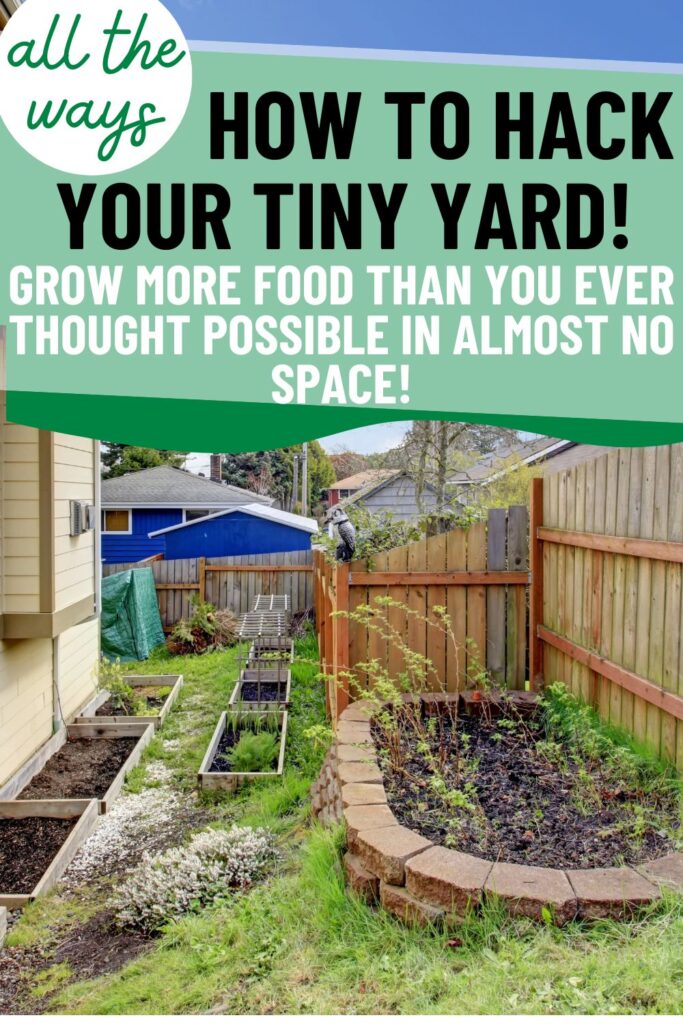
raised beds in small backyard. Text overlay reads "all the ways:  How to hack your tiny yard! Grow more food than you ever thought possible in almost no space!"

Container Gardening:

We live in zone 9a, so the only way to grow some things is in containers.

This year, we’re trying to grow dwarf mango plants in containers and will bring them in and out as necessary.

Grow vegetables in containers such as pots, buckets, or raised beds.

This method is versatile and allows you to place plants strategically to optimize sunlight exposure.

Keyhole Garden:

This is one method I haven’t personally tried, but others swear by it so I thought it deserves a spot on this list.

This circular raised bed design features a center composting basket, surrounded by planting beds.

It maximizes growing space while minimizing the need for pathways, making it ideal for small yards…especially if you plan to create your own compost.

Edible Landscape:

One of the best pieces of gardening advice I’ve ever heard is “you can’t eat the grass.”

Especially in recent years with costs skyrocketing – it just makes sense to try to grow as much of our own food as possible.

In our home, we’d rather have dwarf fruit trees than trees that are simply aesthetically pleasing.

Incorporate vegetables into your existing landscaping, mixing them with ornamental plants.

This approach combines aesthetics with functionality, turning your entire yard into a productive space.

When planning your vegetable garden layout, consider factors such as sunlight exposure, soil quality, water access, and the specific needs of the plants you want to grow. I will encourage you though, start as cheap and as SOON as possible. You can’t grow what you don’t plant. Experiment with different layouts to find the one that works best for your small backyard.

How to Regrow Vegetables from Scraps

Regrowing vegetables from scraps in your kitchen is a fun and sustainable way to reduce food waste and enjoy fresh produce. Plus it makes me feel less guilty to spend more on organic when I know it’s something I can regrow for even more food at home. Here’s a general guide on how to regrow some common vegetables:

Regrow Lettuce, Cabbage, and Bok Choy:

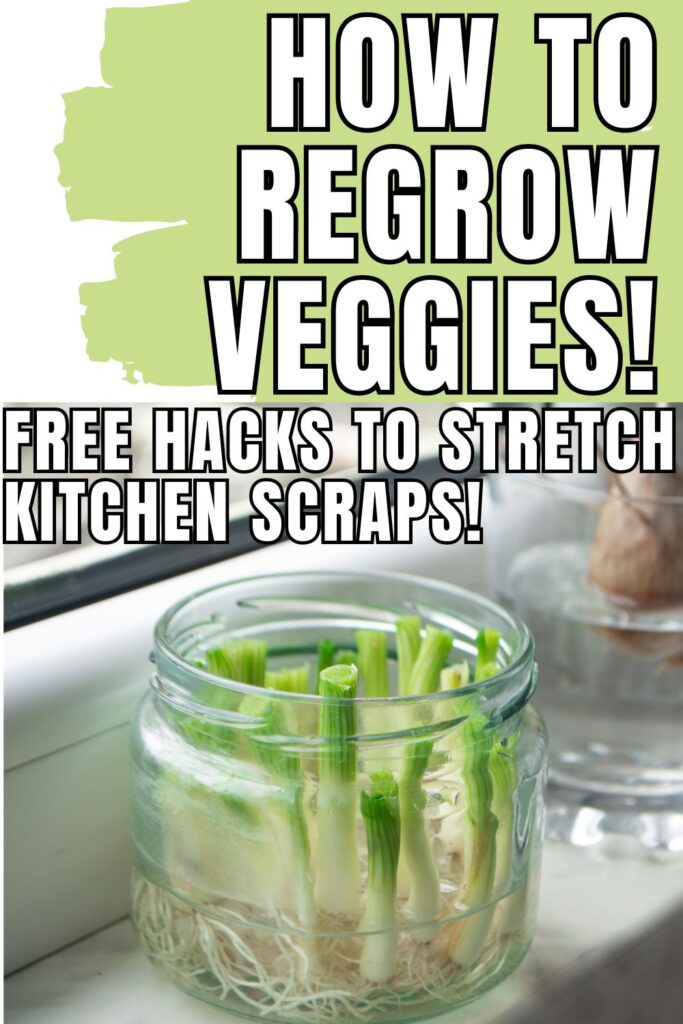
  • Green Onions:
    • Save the bottom inch with the roots intact.
    • Place them in a glass with enough water to cover the roots.
    • Change the water every few days.
    • They will regrow quickly, and you can continue harvesting them as needed.

Regrow Celery, Carrots, and Garlic

  • Celery:
    • Cut off the base of the celery bunch.
    • Place the base in a shallow dish of warm water, ensuring the cut side is down.
    • Change the water every day or two.
    • New leaves will begin to emerge from the center.
    • Once you see significant growth, transplant it into soil.
  • Carrots:
    • Save the top inch or two of a carrot with some greens attached.
    • Place them in a shallow dish of water, ensuring the cut end is submerged.
    • Change the water regularly to prevent rot.
    • You should see new greens sprouting from the top within a few days.
  • Garlic:
    • Save a clove with the skin intact.
    • Plant it in soil with the pointed end facing up, about an inch below the surface.
    • Keep the soil consistently moist.
    • Garlic will begin to sprout and grow into a new bulb.

How to Regrow Potatoes

  • Potatoes:
    • Cut a potato into chunks, making sure each piece has at least one eye.
    • Allow the pieces to dry for a day or two to prevent rotting.
    • Plant the pieces in soil with the eyes facing up, about 4-6 inches deep.
    • Keep the soil evenly moist, and new potato plants will sprout from the eyes.

Remember that while regrowing vegetables from scraps is an enjoyable and sustainable practice, not all vegetables will regrow successfully. Additionally, some vegetables may take longer to regrow than others, so patience is key. Enjoy your gardening adventure!

onions and potatoes regrowing on kitchen counter

© 2026

Theme by Anders NorenUp ↑