
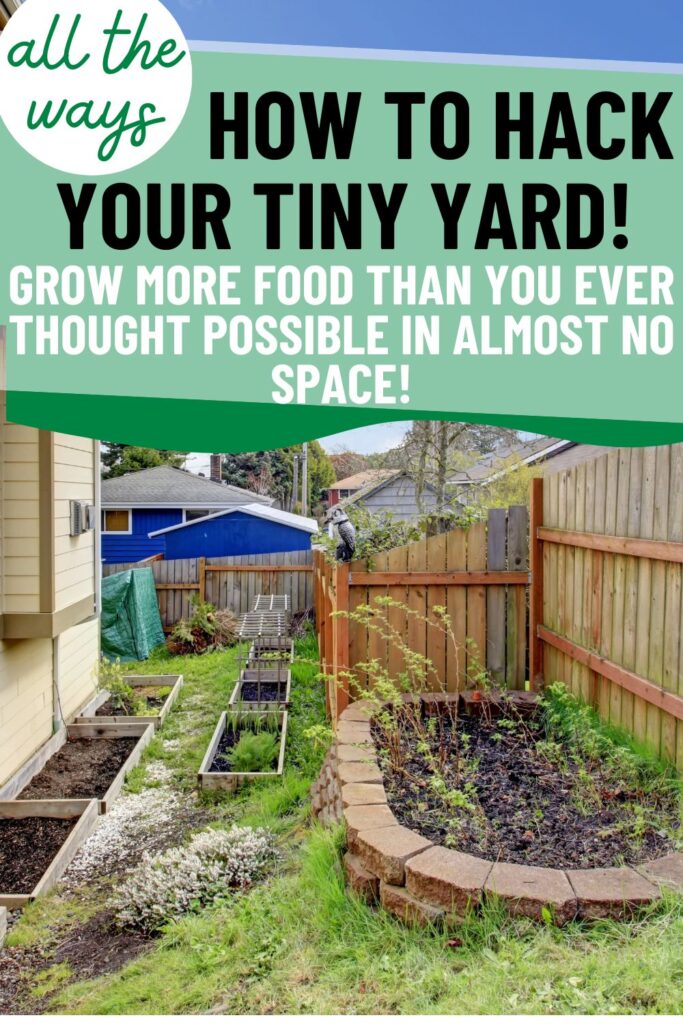
Designing a vegetable garden layout for a small backyard requires careful planning to maximize space and productivity. With a little strategy, you can even make a vegetable garden in the margins of your yard so the little space you do have is still usable for playing and entertaining. Here are some of the best vegetable garden layouts for small spaces:
Square Foot Gardening:
Originally developed by Mel Bartholomew, this is my absolute favorite method on this list.
When I read his book, I just kept thinking “why didn’t I think of this?”
It just makes sense and is so much more efficient than traditional gardening.
To start, divide your garden into square-foot sections using wooden planks or string.
Each square foot can host a different vegetable or herb.
This method maximizes space utilization and makes it easier to manage.
Vertical Gardening:
In our backyard, we combine vertical gardening with square foot gardening.
When you’re short on space, there’s nowhere to go but up.
Utilize vertical space by growing climbing vegetables such as beans, peas, cucumbers, and tomatoes on trellises or vertical structures.
Hanging baskets can also be used for herbs and small vegetables.
Container Gardening:
We live in zone 9a, so the only way to grow some things is in containers.
This year, we’re trying to grow dwarf mango plants in containers and will bring them in and out as necessary.
Grow vegetables in containers such as pots, buckets, or raised beds.
This method is versatile and allows you to place plants strategically to optimize sunlight exposure.
Keyhole Garden:
This is one method I haven’t personally tried, but others swear by it so I thought it deserves a spot on this list.
This circular raised bed design features a center composting basket, surrounded by planting beds.
It maximizes growing space while minimizing the need for pathways, making it ideal for small yards…especially if you plan to create your own compost.
Edible Landscape:
One of the best pieces of gardening advice I’ve ever heard is “you can’t eat the grass.”
Especially in recent years with costs skyrocketing – it just makes sense to try to grow as much of our own food as possible.
In our home, we’d rather have dwarf fruit trees than trees that are simply aesthetically pleasing.
Incorporate vegetables into your existing landscaping, mixing them with ornamental plants.
This approach combines aesthetics with functionality, turning your entire yard into a productive space.
When planning your vegetable garden layout, consider factors such as sunlight exposure, soil quality, water access, and the specific needs of the plants you want to grow. I will encourage you though, start as cheap and as SOON as possible. You can’t grow what you don’t plant. Experiment with different layouts to find the one that works best for your small backyard.
Leave a Reply